Calculate what one control room event really costs | Try our free ROI calculator


June 9, 2026

Incident response inside rail operations centers is critical when the signals that announce an incident arrive late or never reach the controllers at all. In the first minutes of an event, response time is bounded by the distance between what the rail network already knows and what the operations center can see and act on.
Close that distance and the response gets faster. Leave it open, and even a skilled controller is working from an incomplete picture.
Below is where the time actually goes inside rail operations centers, the real case that shows it, and how to get those minutes back.
These are the bottlenecks that quietly add minutes to rail incident response, and what removes each one.
The clearest case of how response stalls inside a rail operations center is the 2015 L'Enfant Plaza incident in Washington. On January 12, a Yellow Line train carrying about 380 passengers stopped in a tunnel after running into heavy smoke from an electrical arcing event. One passenger died, and dozens more were injured.
What makes the case instructive is where the time went. According to the NTSB investigation, a smoke detector near the source activated at 3:04 p.m. but never displayed at the Rail Operations Control Center. That’s because a loose wire had cut its link to the agency's information management system.
The network detected the problem, but the room did not see it.
With that signal missing, controllers fell back on routine, asked the train operator to look for the smoke, and allowed a following train toward the same station. Passengers waited more than 30 minutes for firefighters to reach them. \
The controllers responded with the information in front of them, and that information was missing the one detail that decided the outcome.
Luckily, rail has grown much safer over two decades. Federal data compiled by the rail industry shows the train accident rate has fallen 33% since 2005. That progress raises the stakes for the incidents that still happen, because those are the ones where the minutes inside the operations center decide how they end.
The delay rarely traces back to one broken tool. It builds up across the way a control room is wired together, where each system was added to solve its own problem and never connected to the others. Here is where those minutes accumulate.
A rail operations center runs signaling and train control on one console, traction power on another, CCTV on a third, and passenger information on a fourth.
Each is accurate on its own, but the correlation between them lives only in the controller's head. In a lucky scenario, that holds up on a normal shift and breaks down the moment an incident spans several systems at once.
This is the everyday version of the L'Enfant gap, and it is the pattern behind so many control rooms running on disconnected systems. Every second a controller spends reconciling consoles is a second not spent directing the response.
The loose wire at L'Enfant was a single failure, but the category is common. A rail track monitoring system, a hot-box detector, or a track circuit can register a fault that never surfaces for the controller. That’s because the link between the field and the room is partial or unmonitored.
A feed that has gone silent often looks identical to a calm one on a basic display.
Closing this gap means aggregating every operational source into one stream and watching the health of each feed. That is the function of data integration software, and specifically of GridGuardian, Primate's own data aggregation and intelligence engine.
This software consolidates SCADA, CCTV, sensor, and signaling feeds into a single normalized picture and flags a source the moment it stops reporting. A controller then knows when the room has gone quiet on purpose and when it has gone quiet because something failed.
When a real event begins, it rarely trips one alarm. It trips dozens, most of them downstream effects of a single root cause, and the alarm that started everything is somewhere in the pile. The controller who most needs clarity gets the least readable screen of the entire shift.
A center that ranks alarms by operational impact and suppresses duplicates tied to one cause keeps the original signal visible. One that reports every alarm with equal weight turns the most important moment into the slowest one to read.
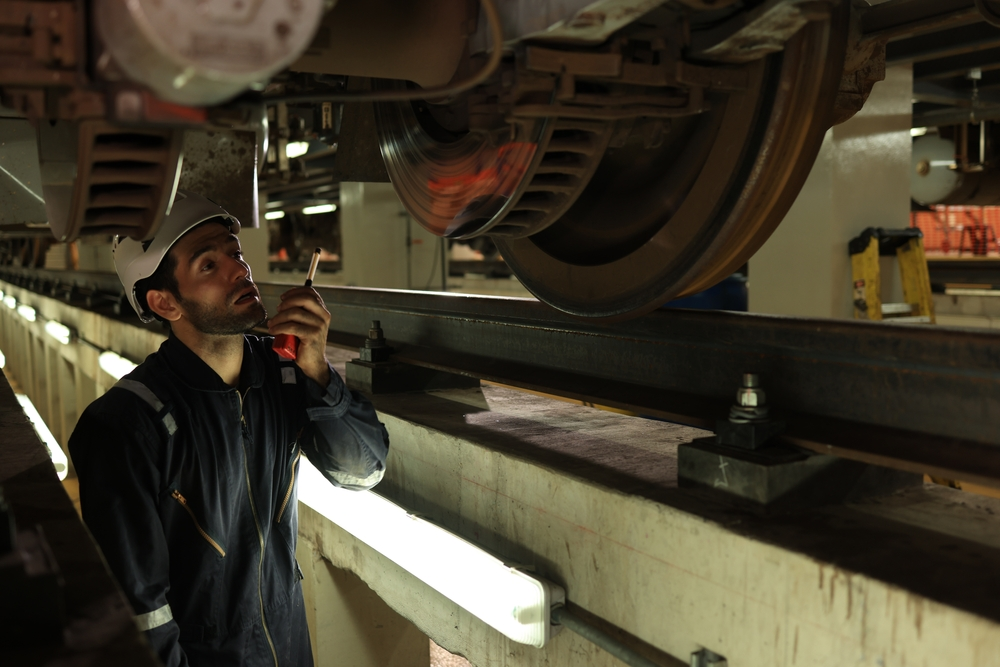
Even with every feed present, a list of values does not show a controller where an incident sits on the line or what it threatens next. Without a geographic view, the location of a stalled train, the segment losing power, and the trains approaching behind it are three separate facts on three separate screens.
This is where strong situational awareness software changes the response. For example, Primate’s BlackBoard and TileViewer render the normalized feed as a spatial, schematic, or geographic view all at once. This way, a controller sees the incident, its cause, and its downstream effects in one frame instead of building that relationship by hand.
The fix to this issue is a sequence that runs in order.
The last piece is continuity from the workstation to the wall. The view a controller trusts at their desk has to match what is shown on the control room video wall when an event escalates, and the team gathers around it.
For instance, Primate uses vector-based rendering to keep that picture identical at any scale, so coordination during an incident does not stall while people reconcile two versions of what is happening. The same approach prevents the kind of blind spot where operators miss critical conditions, even with modern systems.
Run the L'Enfant scenario again with the gap closed. The smoke detector fires, and because the feed is integrated and monitored, the activation displays at the operations center the instant it happens. Alongside it, the controller keeps track of the location of every train in the affected tunnel.
The controller also sees the alert ranked above routine traffic, sees train 302's position relative to the source, and sees the following train approaching on the same geographic view.
The standard procedure to hold all trains executes in seconds, because the controller is reading one complete picture rather than assembling it from a radio call and four consoles. The incident stays small because the room saw what the network already knew.
Incident response in rail operations centers is slow for a reason that is fixable. The minutes are lost in the gap between detection and display, where signals scatter across separate systems, and the controller carries the work of putting them together under pressure.
Aggregate the feeds, visualize them as one state, and prioritize what reaches the controller, and that gap closes.
If your team is still working incidents across disconnected systems, that is the gap worth closing before the next one tests it. Request a demo to see how Primate gives your rail operations center one real-time view from desk to wall.


See if your control room is prepared to support AAR and DLR across visibility, data, and operations.
Check Readiness →
.png)