
Calculate what one control room event really costs | Try our free ROI calculator


Modern SCADA systems are far more capable than their predecessors. Faster polling, better interfaces, richer data, smarter alarms. Learn more.
February 10, 2026
.jpg)
Modern SCADA systems are far more capable than their predecessors. Faster polling, better interfaces, richer data, smarter alarms. On paper, they should give operators everything they need to manage mission-critical operations with confidence.
And yet, critical conditions are still missed.
Not because operators are careless. Not because SCADA is broken. But because visibility and understanding are not the same thing.
This article breaks down why modern SCADA systems still fall short during high-pressure situations, where the gaps typically appear, and what actually helps operators catch critical conditions before they escalate.
Modern SCADA systems excel at reporting status. Device states, measurements, alarms, and controls are all available in near real time. But the problem is not access to data. The problem is relevance.
Operators are often presented with hundreds or thousands of data points, all technically correct, but not prioritized in a way that reflects operational risk. During normal conditions, this is manageable. During abnormal or fast-moving events, it becomes overwhelming.
Critical conditions are rarely a single alarm. They emerge from relationships between assets, loads, environmental factors, and time. SCADA shows the pieces. Operators are expected to assemble the picture.
In mission-critical operations, that mental assembly is where things break down.
Alarm management has improved, but alarm flooding remains one of the most common reasons operators miss critical conditions.
Modern SCADA systems can generate alarms faster and in greater volume than ever before. When multiple systems react to the same underlying issue, operators are faced with a cascade of alerts that all demand attention.
Even well-configured alarm priorities lose meaning when dozens of alerts arrive simultaneously. Operators shift into triage mode, acknowledging alarms to regain control rather than to understand cause and impact.
That means critical conditions can be buried in noise, not because they were not detected, but because they were not visually or contextually distinct.
This is not an operator failure. It is a presentation problem.
SCADA systems are typically asset-centric. They focus on individual devices or points rather than system-level behavior.
An operator might see voltage trending down on one feeder, increased load on another, and weather moving into the area, all on separate screens. Each signal alone may not trigger concern. Together, they represent a developing critical condition.
Modern SCADA systems are not designed to automatically surface these relationships visually. Operators must notice patterns across multiple views, often while responding to other demands.
In mission-critical operations, emerging risk does not announce itself cleanly. It develops quietly across systems. Without an integrated context, it is easy to miss until consequences appear.
Even in control rooms with advanced SCADA, operators often rely on multiple applications alongside it. OMS, GIS, weather tools, historian views, crew tracking, and communication platforms all play a role.
Every screen switch is a context switch. Each one interrupts situational awareness.
Operators lose continuity when they must leave one view to confirm information elsewhere. During fast-moving events, this interruption increases the chance that subtle but important changes go unnoticed.
Modern SCADA systems were not built to be the single operational picture. They were built to control and monitor specific systems. Expecting them to carry full situational awareness creates gaps that only show up under pressure.
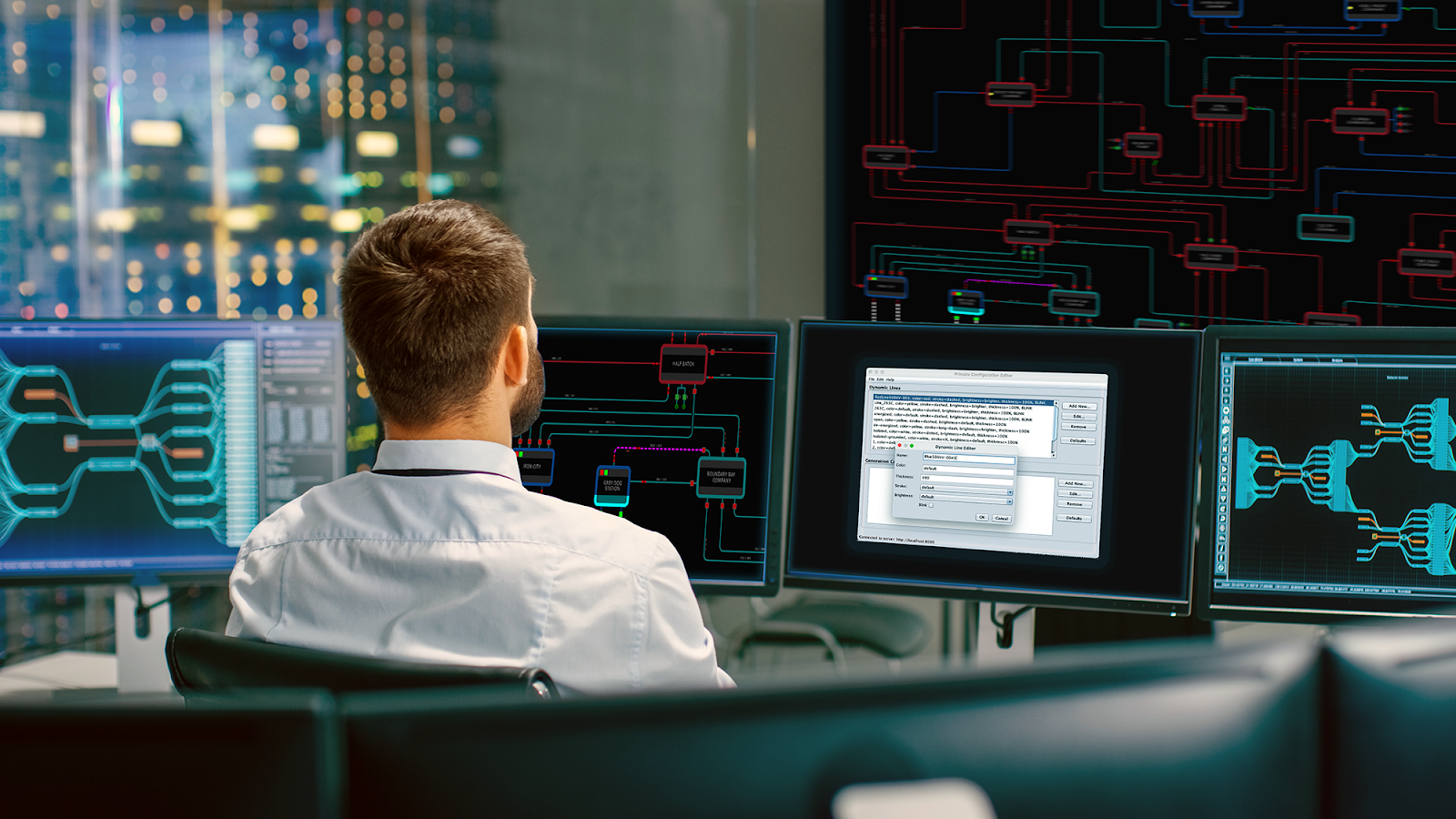
One uncomfortable truth in mission-critical operations is that human attention does not scale with data volume.
Modern SCADA systems can display far more information than operators can realistically process, especially during abnormal conditions. Better graphics and faster updates help, but they do not solve cognitive overload.
Operators are forced to prioritize. When everything looks important, nothing truly stands out.
Critical conditions are often missed, not because they were invisible, but because they did not visually demand attention at the right moment.
Designing for human performance means accepting these limits and building systems that highlight significance, not just status.
Many critical conditions only become obvious in hindsight. Trends, correlations, and slow-developing issues are clear once data is reviewed after the event.
Modern SCADA systems often rely on separate historian tools for this analysis. By the time insights are available, the moment to act has passed.
In mission-critical operations, operators need forward-looking awareness, not just post-event clarity. Seeing how conditions are evolving in real time, across systems, is essential for preventing escalation.
Without integrated visualization and real-time correlation, SCADA remains reactive, even when the data exists to be proactive.
The answer is not more alarms, more screens, or more training alone.
Operators catch critical conditions when information is presented in context, at scale, and in a way that aligns with how decisions are made during real events.
That means visualizing relationships, not just points. It means showing system state, dependencies, and risk indicators together, instead of being spread across applications.
It also means designing displays for mission-critical operations, where clarity at a glance matters more than detail density.
Primate’s approach complements modern SCADA systems by aggregating data from across operational platforms and presenting it through purpose-built visualization. Operators are not asked to interpret raw data faster. They are shown what matters, when it matters.
Modern SCADA systems remain essential. They are not the problem. The problem is expecting them to do a job they were never designed to do alone.
Mission-critical operations demand a shared, real-time understanding of system conditions across the control room. That understanding comes from integrated visualization, scalable displays, and context-driven awareness.
When operators can see the full picture clearly, critical conditions stand out earlier. Decisions happen sooner. Risk is reduced.
This is not about replacing SCADA. It is about giving operators the operational awareness layer they need to make SCADA data actionable under pressure.
Modern SCADA systems generate the data. Operators bring the expertise. What is often missing is the connective tissue that turns information into insight during mission-critical operations.
Improving that connection is one of the most effective ways to reduce risk, improve response, and support the people responsible for keeping systems safe and reliable.
If you want to see how integrated visualization changes what operators notice and when, request a demo and see how mission critical awareness looks when everything is finally visible in one place.


See if your control room is prepared to support AAR and DLR across visibility, data, and operations.
Check Readiness →