
Calculate what one control room event really costs | Try our free ROI calculator


Control rooms sit at the center of every major outage response, yet their impact on cost is often underestimated. Learn more.
February 10, 2026

Control rooms sit at the center of every major outage response, yet their impact on cost is often underestimated. When outages are reviewed after the fact, attention usually goes to weather severity, asset condition, or field execution.
Far less scrutiny is given to how quickly operators could understand system conditions, validate restoration paths, and make confident decisions.
This gap matters because time lost in the control room compounds across the entire restoration effort. Even short delays in assessment, coordination, or approval can extend outages at scale.
The U.S. Department of Energy estimates that power outages cost the U.S. economy between $100B and $150B every year, driven largely by extended outage duration, slow restoration, and coordination failures.
While not all of that cost sits inside the control room, restoration speed and decision quality are consistently identified as major contributors.
Even small delays scale quickly. In large utility territories, one additional hour of outage during a major event can affect tens or hundreds of thousands of customers.
Industry analyses commonly estimate the cost of interruption at $5 to $10 per customer per minute for commercial and industrial loads, with residential impacts compounding through regulatory penalties and customer compensation programs.
When control rooms rely on disconnected systems, restoration time stretches not because crews are unavailable, but because decisions take longer to validate.
Labor is often the biggest ongoing cost tied to control rooms, and disconnected systems quietly inflate it.
A fully loaded control room operator typically costs between $110,000 and $150,000 per year once salary, benefits, training, and shift coverage are included. During major events, additional staffing is often brought in to compensate for visibility gaps and coordination overhead.
If operators spend even 15 to 20% of their time reconciling data across systems instead of acting on a unified view, that inefficiency alone can represent tens of thousands of dollars per operator per year. Multiply that across multiple shifts, multiple control rooms, and surge staffing during events, and the number grows quickly.
Modern control room solutions improve operator efficiency by reducing system switching, manual validation, and verbal coordination. That improvement directly affects labor cost without reducing safety or coverage.
This is one of the fastest areas where ROI becomes visible.
Outage duration is not just a reliability metric. It is increasingly tied to financial consequences.
Utilities operating under performance-based regulation face penalties when SAIDI and SAIFI metrics exceed thresholds. Even in non-penalty environments, extended outages increase regulatory scrutiny and post-event reporting costs.
NERC disturbance analyses repeatedly show that situational awareness gaps contribute to delayed restoration, particularly during complex or cascading events. These delays often occur inside the control room before field execution begins.
When disconnected systems prevent operators from seeing restoration dependencies clearly, the financial impact shows up later as missed targets, corrective action plans, and added operational oversight.
Operational risk is another cost driver that is difficult to quantify until something goes wrong.
Switching errors, incomplete isolation, or misaligned restoration sequencing can result in equipment damage, safety incidents, or secondary outages. Even when incidents are avoided, near-misses generate investigation, documentation, and process changes that consume time and resources.
According to industry safety studies, human performance issues linked to poor situational awareness are a leading contributor to operational risk during abnormal conditions.
Disconnected systems increase this risk by forcing operators to infer context instead of seeing it directly. Integrated visualization reduces that exposure by making the system state explicit.
The financial impact of avoiding a single major incident often exceeds the cost of improving control room visibility.
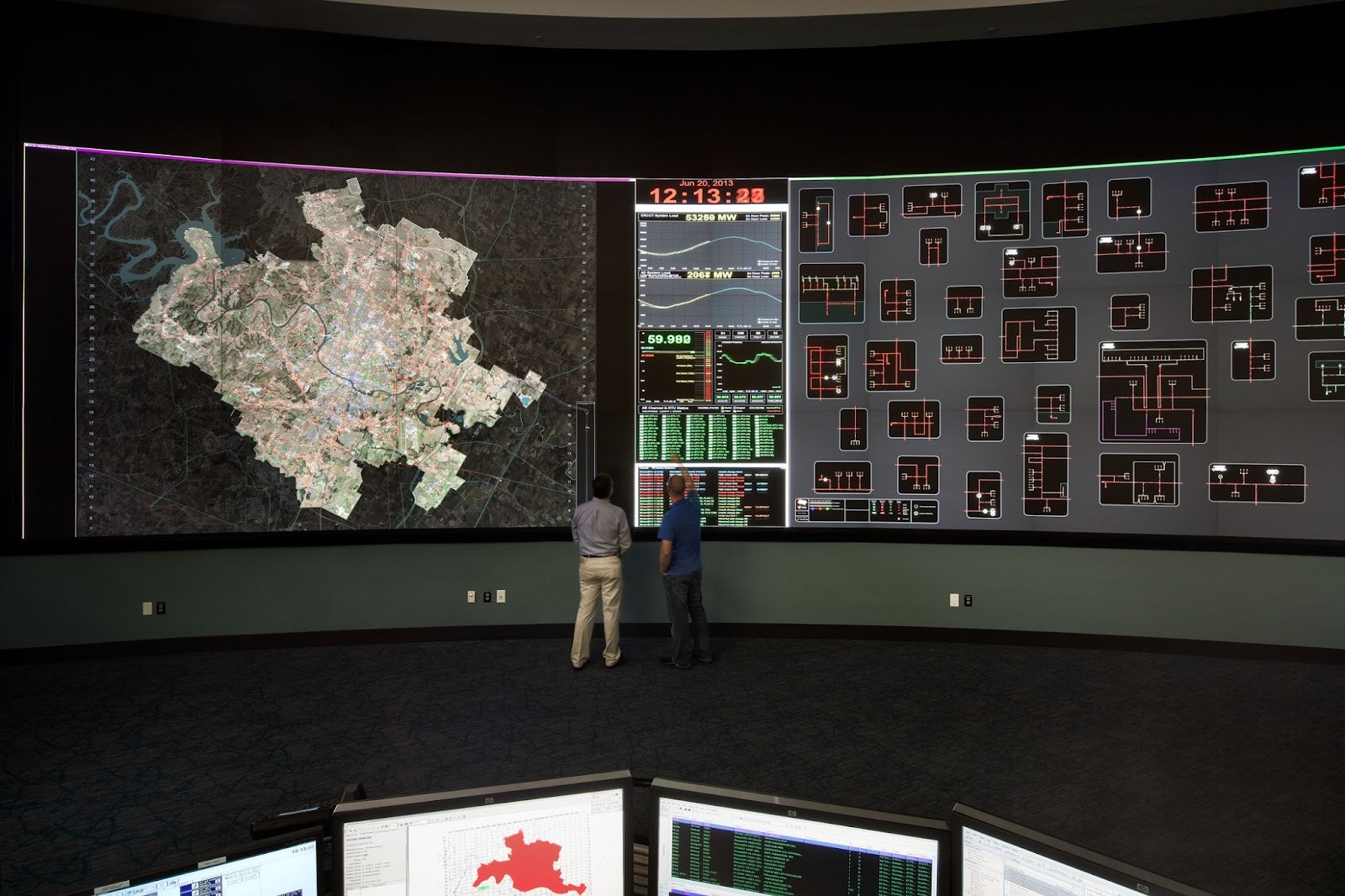
Disconnected systems also drive ongoing technical costs.
Each additional integration point introduces maintenance overhead. Updates must be coordinated. Failures must be diagnosed across vendors. During events, troubleshooting becomes slower because responsibility is fragmented.
IT and OT teams often spend hundreds of hours per year maintaining brittle integrations whose only purpose is to move data between systems that were never designed to work together.
Unified control room solutions reduce this overhead by centralizing visualization and logic without replacing underlying systems. That reduction shows up as fewer support hours, faster issue resolution, and lower long-term integration costs.
Most organizations underestimate the cost of disconnected control rooms because those costs are distributed.
Labor inefficiency sits in operations budgets. Outage penalties sit in regulatory reporting. Integration costs sit in IT. Risk exposure sits nowhere until an incident occurs.
This is exactly why ROI analysis matters.
Primate’s ROI calculator brings these factors together. By modeling reduced outage duration, improved operator efficiency, lower incident risk, and reduced support overhead, it shows how control room solutions affect the total cost of operations, not just software spend.
In many cases, teams discover that small improvements in visibility deliver outsized financial returns.
Running control rooms on disconnected systems is not just a technical choice. It is a financial one.
The costs show up in longer outages, higher labor spend, increased risk, and ongoing integration overhead. Most of these costs are accepted as normal simply because they are hard to see.
Once they are quantified, the conversation changes.
If you want to see how modern control room solutions eliminate these blind spots in real time, the next step is simple. Explore Primate today to see how unified visualization and situational awareness change how control rooms operate when it matters most.


See if your control room is prepared to support AAR and DLR across visibility, data, and operations.
Check Readiness →