Calculate what one control room event really costs | Try our free ROI calculator


The three main components of a SCADA system are the Human-Machine Interface (HMI), the supervisory system (SCADA software), and field devices like RTUs and PLCs.
April 22, 2026

The three main components of a SCADA system are the Human-Machine Interface (HMI), the supervisory system (SCADA software), and field devices like RTUs and PLCs. Together, they enable real-time monitoring, control, and decision-making across complex infrastructure.
In the world of industrial automation and mission-critical infrastructure, systems must operate continuously, securely, and with complete visibility. This is especially true in power grid and utility operations, where decisions depend on real-time data from distributed assets.
At the center of this ecosystem is SCADA, short for Supervisory Control and Data Acquisition. For control room operators, understanding how these core components work together directly impacts situational awareness, response time, and operational reliability.
A SCADA system is a framework used to supervise and control industrial processes from a centralized location. It collects data from sensors and equipment across facilities, substations, or entire networks, allowing operators to monitor conditions, respond to events, and optimize performance remotely.
SCADA is widely used across electric utilities, water treatment, gas pipelines, and transportation systems. Its role is simple in concept but critical in execution. It gives operators visibility and control without requiring physical presence at every asset.
In modern control rooms, SCADA is not just about monitoring. It is the foundation for real-time operational awareness.
While implementations vary, every SCADA system is built around three core components:
Each plays a distinct role, but the real value comes from how they work together.
The Human Machine Interface is where operators interact with the system. It translates raw operational data into visual formats that people can understand quickly.
Through the HMI, operators can:
In practice, the HMI has a direct impact on decision-making. If the interface is cluttered, inconsistent, or hard to read, operators lose time trying to interpret what they are seeing.
That is why modern control rooms are moving beyond basic dashboards. High-performance visualization layers, like those used in platforms such as BlackBoard™, focus on clarity at scale.
Instead of forcing operators to interpret multiple disconnected views, they present aggregated data in schematic, geospatial, and trend-based formats that make issues easier to spot.
The difference shows up during critical events. A well-designed HMI reduces cognitive load and helps operators act faster.
The supervisory system is the core engine behind SCADA. It collects data from field devices, processes it, applies logic, and makes it available to operators.
Its key responsibilities include:
This is where raw data becomes usable information.
In smaller environments, this layer may be relatively simple. In large-scale operations like electric grids, it becomes significantly more complex. Multiple systems, including EMS, OMS, GIS, and external data sources, all feed into the operational picture.
This is where many control rooms start to struggle. Data exists, but it is fragmented across systems.
Solutions like Primate’s GridGuardian™ address this by consolidating data from multiple operational platforms into a single, consistent view. Instead of operators manually correlating inputs, the system processes and aligns them before they reach the screen.
That shift reduces interpretation time and improves decision accuracy.
RTUs and PLCs sit at the edge of the system, directly connected to physical infrastructure.
They are responsible for collecting data and executing control commands in real time.
These devices ensure that the SCADA system has continuous, reliable access to operational data.
Without them, the system would have no visibility into what is happening on the ground.
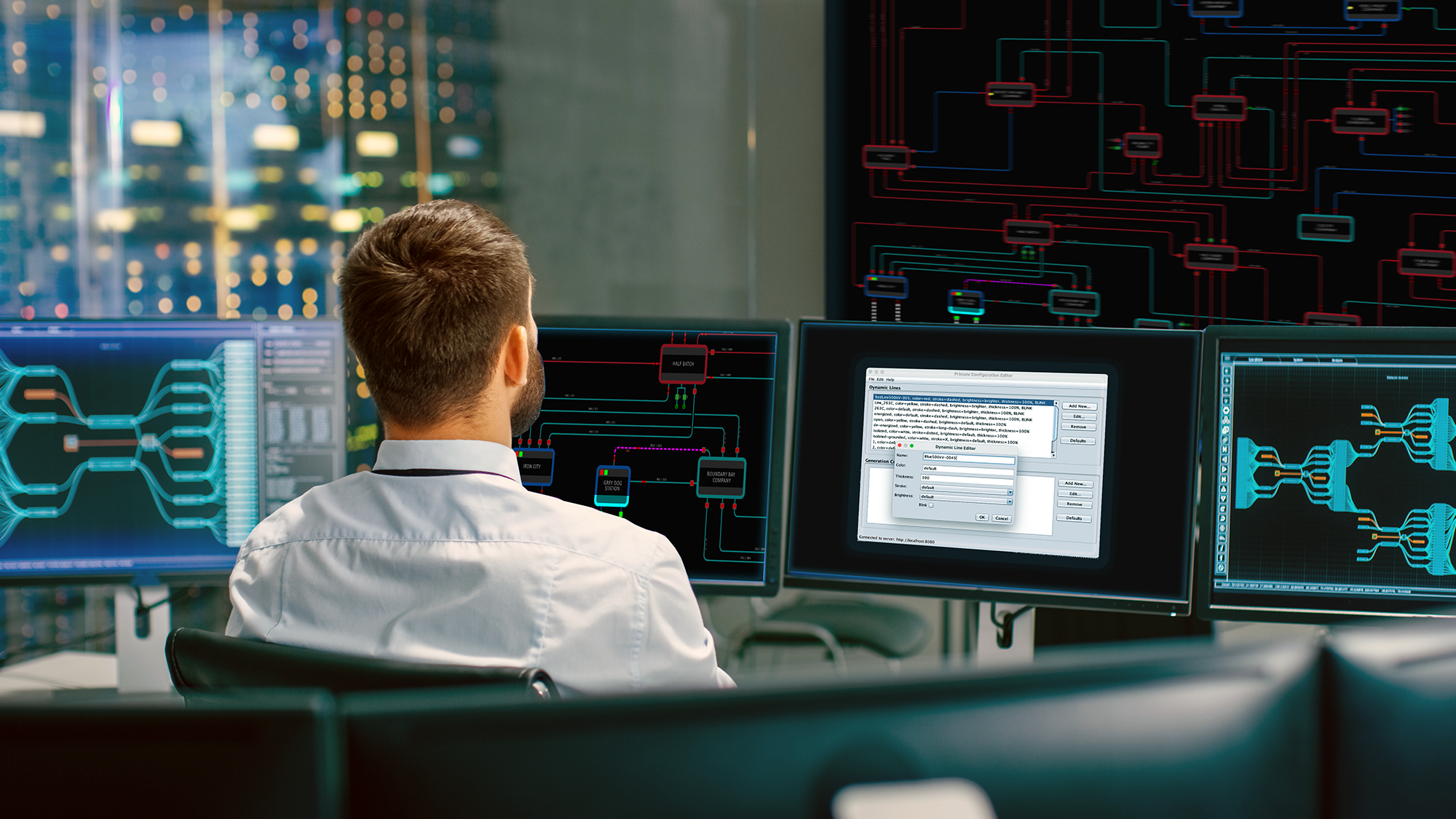
Understanding SCADA is not just about knowing the components. It is about understanding how they interact in real operations.
The flow looks like this:
This loop runs continuously.
In theory, it sounds straightforward. In reality, complexity increases as systems scale. More assets, more data, more dependencies.
SCADA systems are essential, but they are only part of the picture.
In many control rooms, SCADA operates alongside other critical systems and external data feeds. The challenge is not just collecting data from these systems, but making sense of all of it in one place.
This is where an additional layer becomes necessary.
Primate sits on top of existing systems, including SCADA, and focuses on how that data is aggregated, processed, and visualized for operators. Instead of replacing SCADA, it enhances how operators interact with it.
In practice, this means data from SCADA and other systems is consolidated into a single operational view. Then, information is processed and aligned before it reaches the display, and eventually, operators see a clear picture instead of switching between tools
This way, operators spend less time interpreting information and more time acting on it.
SCADA systems form the backbone of modern control room operations. The combination of HMIs, supervisory software, and field devices enables operators to monitor, analyze, and control complex infrastructure in real time.
As operations grow more distributed and data-heavy, the challenge is no longer just collecting information. It is making that information usable.
If your control room still relies on switching between systems or piecing together information manually, there is a better way to approach it.
Request a demo and see how we turn SCADA and operational data into a clear, unified view that helps your team make faster, more confident decisions when it matters most.


See if your control room is prepared to support AAR and DLR across visibility, data, and operations.
Check Readiness →