
Calculate what one control room event really costs | Try our free ROI calculator


Power outage restoration rarely fails because crews don’t know what to do. It fails because control rooms can’t see the full picture fast enough. Read more.
February 10, 2026
.jpg)
Power outage restoration rarely fails because crews don’t know what to do. It fails because control rooms can’t see the full picture fast enough.
When a major outage hits, the clock starts immediately. Utilities are under pressure from regulators, customers, and internal leadership to restore service safely and quickly. Yet in many traditional control rooms, operators are forced to piece together the state of the grid from disconnected systems, static displays, and manual updates.
The result is delayed decisions, missed dependencies, and restoration plans that break down under real-world conditions.
This article looks at why power outage restoration struggles in traditional control rooms, where the process collapses during high-stress events, and what has to change to make restoration more resilient.
Power outage restoration is often discussed as a field execution challenge. Crew availability, switching orders, fuel constraints, and access issues all matter. But long before crews roll, restoration decisions are made in the control room.
Operators need to understand which assets are de-energized, which paths are available, what loads can be picked up safely, and how conditions are changing minute by minute. That understanding depends entirely on how information is presented.
Traditional control rooms were built around individual systems. SCADA shows device status. OMS tracks outages. GIS provides asset location. Historian tools show trends after the fact. Each system works well on its own, but during restoration they become silos that operators must mentally stitch together.
In calm conditions, that cognitive work is manageable. During a large outage, it becomes a bottleneck. Operators are no longer restoring power, but reconciling screens.
During power outage restoration, time matters most when the system is most unstable. Unfortunately, that is when traditional control room setups perform the worst.
Operators are forced to swivel between systems to answer basic questions. Is this feeder truly isolated or just reported down? Are crews already working nearby or still en route? Has upstream transmission been cleared for re-energization? Is weather still a factor in this zone?
Each answer lives in a different application. None of them are synchronized visually. Some data refreshes in seconds, others in minutes. Some are real time, others are delayed snapshots.
This fragmentation introduces hesitation. Operators wait for confirmation instead of acting. Restoration sequences slow down, not because decisions are unclear, but because confidence is missing.
Primate addresses this directly by aggregating operational systems into a unified, real-time visualization layer. When SCADA, OMS, GIS, weather, crew location, and security data are seen together in a single operational picture, restoration decisions move forward with clarity instead of caution.
Power outage restoration is not linear. Restoring one element often depends on the state of several others. Traditional control room displays struggle to represent those relationships dynamically.
Many control rooms still rely on static one-line diagrams or desktop screens stretched across video walls. These displays were never designed to adapt in real time as restoration conditions change. Operators must mentally track which paths are viable, which assets remain locked out, and where risk still exists.
As outages scale, this mental model breaks. Dependencies are missed. Loads are picked up too early or delayed unnecessarily. Restoration plans become conservative by default, which extends outage duration.
Modern restoration requires dynamic visualization. Operators need to see energized paths, isolation points, crew progress, and environmental risks update continuously.
Primate’s vector-based display architecture allows these views to scale from desktops to video walls without losing clarity, making complex restoration logic visible instead of implicit.
Power outage restoration is executed by people under stress. Traditional control rooms place an enormous cognitive burden on operators during major events.
Every extra screen, manual cross-check, or ambiguous indicator adds friction. Over time, this leads to slower reaction times, higher error risk, and fatigue that compounds across long restoration windows.
Research from the U.S. Department of Energy highlights that situational awareness failures are a leading contributor to delayed restoration and operational errors during grid events. When operators cannot easily perceive system state, decision quality suffers, even when procedures are sound.
But situational awareness is not about more data. It is about presenting the right data in context.
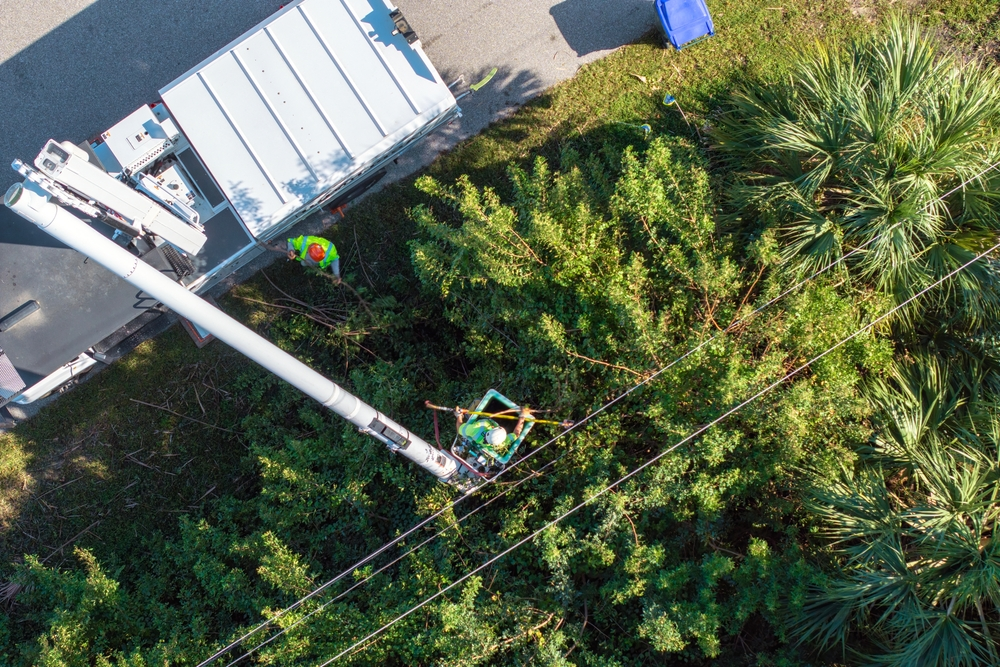
For instance, Primate’s approach focuses on applied visualization design, where displays are built around how operators think during restoration, not around how systems store data. By reducing cognitive load and presenting restoration-critical information visually, control rooms improve both speed and accuracy during outages.
Many utilities invested in video walls expecting better power outage restoration outcomes. In practice, many of these walls display the same desktop applications, simply enlarged.
This introduces new problems. Text becomes unreadable at distance. Graphics pixelate. Operators rely on workstations instead of the wall, defeating its purpose. During restoration briefings, teams gather around a display that cannot clearly show the current state of the grid.
A video wall should act as a shared source of truth during power outage restoration. That requires content designed for large-scale viewing, synchronized across all displays, and updated in real time.
For example , Primate’s video wall solutions are purpose-built for operational environments. Vector rendering ensures clarity at any scale. Display synchronization guarantees that everyone is looking at the same information, at the same time, without lag or distortion.
Power outage restoration is a team effort. Control room operators, field crews, planners, and leadership all rely on a common understanding of progress and risk.
Traditional systems communicate status through text updates, phone calls, and ad hoc reports. This way, context is lost. Questions repeat. Decisions are revisited because visibility is incomplete.
When restoration context is visible across the control room, coordination improves. Leaders understand constraints. Crews receive clearer direction. Operators spend less time explaining and more time executing.
Primate supports this by enabling consistent views across video walls, desktops, and remote access points. Restoration status is no longer trapped in one seat or one application. It becomes a shared operational reality.
Organizations like NERC have made it clear that restoration performance is a reliability priority. Post-event reviews often focus on communication, coordination, and decision timelines, not just equipment failures.
Traditional control rooms struggle to demonstrate how decisions were made during outages. Data is scattered. Event timelines are reconstructed after the fact. Lessons learned are incomplete.
With integrated visualization and historian replay capabilities, Primate enables control rooms to review restoration events with full context. Decisions can be traced visually, not inferred from logs. This supports compliance, training, and continuous improvement.
According to NERC disturbance reports, utilities that struggle during restoration often cite visibility gaps and coordination issues as contributing factors, not lack of procedures or staffing.
Power outage restoration today requires more than reliable field execution. It requires control rooms that can see, understand, and adapt in real time.
That means integrated data instead of silos. Dynamic displays instead of static screens. Visualization designed for human performance, not system convenience.
Primate’s platform was built specifically for these conditions. By unifying operational data, delivering scalable visual clarity, and supporting real-time situational awareness, it addresses the root causes that slow restoration in traditional control rooms.
When power outage restoration breaks down, it is rarely because utilities lack expertise. It is because control rooms lack visibility at the moment it matters most.
If your restoration process feels slower and more stressful than it should, the problem may not be your people or your plans. It may be how your control room sees the grid.
If you want to understand what modern, restoration-ready visualization looks like in practice, it is time to see it in action.
Request a demo now and see how power outage restoration changes when operators finally have the full picture.


See if your control room is prepared to support AAR and DLR across visibility, data, and operations.
Check Readiness →