Calculate what one control room event really costs | Try our free ROI calculator


This guide breaks down the best video wall software options based on real-world performance, not marketing claims. Learn more.
March 30, 2026
.jpg)
If you're searching for the best video wall software in 2026, you're not just comparing features. You're deciding how your control room actually operates under pressure.
Most vendors will show you clean dashboards and smooth demos. That’s not where the real differences show up. The gap becomes obvious when systems scale, data multiplies, and operators need answers fast.
This guide breaks down the best video wall software options based on real-world performance, not marketing claims. We’ll compare five leading platforms, where they stand out, where they fall short, and what actually matters when you’re making a decision.
Before diving into each option, here’s a quick side-by-side look at the best video wall software in 2026.
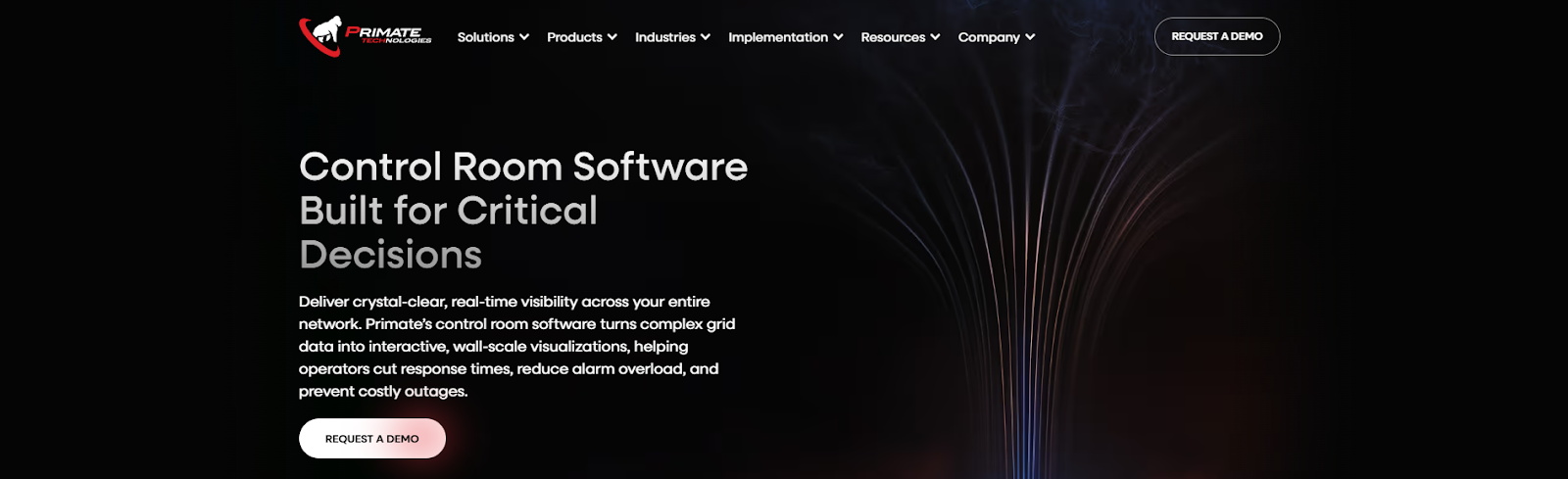
If you are dealing with real-time infrastructure, utilities, pipelines, or transportation systems, Primate stands out as the best video wall software for operational clarity.
What makes it different is simple. It does not just display content. It processes and organizes data before it hits the screen.
Instead of pushing SCADA, GIS, and other system feeds directly onto a video wall, Primate aggregates and transforms that data into a single operational view.
This matters because most control rooms are not struggling with access to data. They are struggling with understanding it fast enough. Primate solves that by reducing cognitive load and presenting only what matters, when it matters.
Biggest advantage:
Unified, real-time operational intelligence across all systems
Pros:
Cons:
Barco is another recognized name in video wall environments, and for good reason.
Their CTRL platform combines hardware and software into a tightly integrated ecosystem. It is reliable, stable, and widely used in enterprise command centers.
Where Barco shines is in performance and infrastructure. Where it falls short is flexibility, as it is not designed to deeply process operational data. Rather, it focuses on delivering and managing visual content across displays.
Biggest advantage:
Reliable, enterprise-grade video wall infrastructure
Pros:
Cons:
Userful takes a different approach by focusing on AV-over-IP.
This makes it one of the best video wall software options for IT teams that want flexibility without heavy hardware dependency.
It is easy to deploy, scalable, and works well in environments where content distribution is the main priority. But when it comes to real-time operations, it lacks depth.
Biggest advantage:
Simple, scalable AV-over-IP deployment
Pros:
Cons:
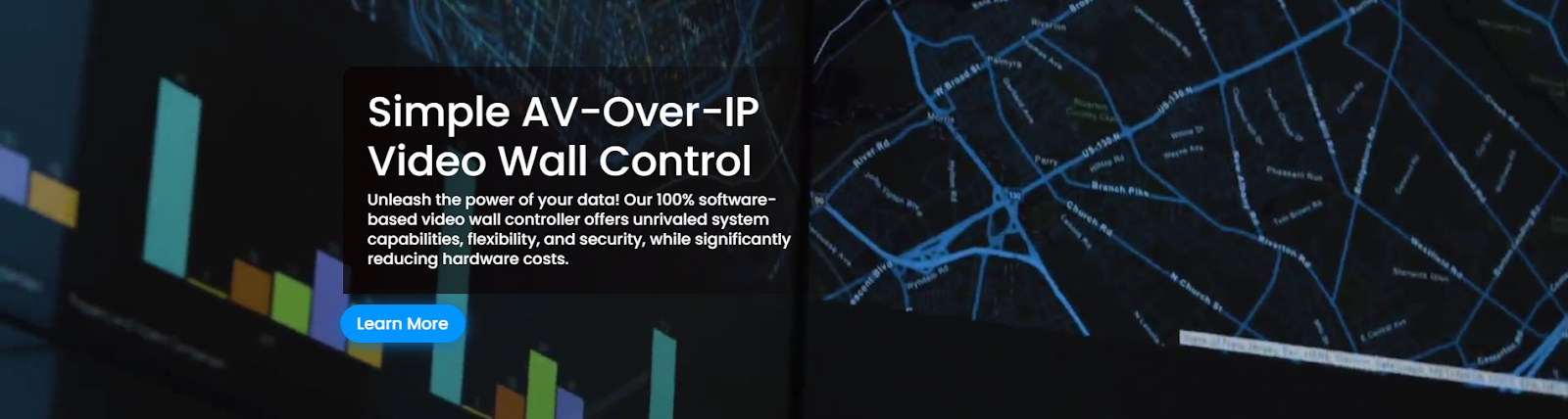
Hiperwall is built around flexibility and scalability.
It allows organizations to create large video wall environments using standard hardware, which makes it appealing from a cost and deployment perspective.
It works well for distributing content across multiple screens, especially in environments like security operations or corporate monitoring. However, it is not designed to unify or interpret complex operational data streams.
Biggest advantage:
Flexible scaling using standard hardware
Pros:
Cons:
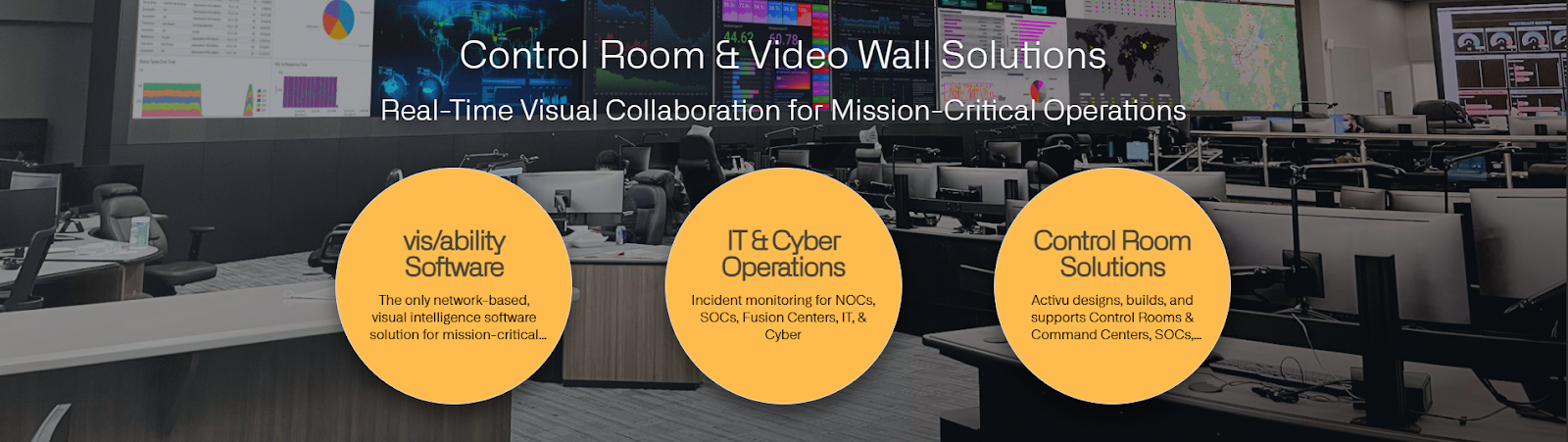
Activu focuses heavily on collaboration.
It allows teams to share content, coordinate across departments, and manage workflows within command centers. This makes it useful in emergency response environments where communication matters as much as data.
However, the tradeoff is complexity. The interface and system setup can become harder to manage as scale increases.
Biggest advantage:
Strong collaboration and data-sharing capabilities
Pros:
Cons:
Most comparisons focus on display capabilities. Resolution. Screen count. Hardware compatibility.
But that is not where the real value is anymore.
The biggest shift in 2026 is this: video walls are no longer about displaying content. They are about making sense of data.
That is why platforms like Primate are gaining traction. They sit above systems, aggregate data, and turn it into something operators can actually use.
If your video wall is just showing feeds, you are missing the point.
If you are evaluating the best video wall software, focus on what actually impacts operations.
These are the features that separate display tools from real control room platforms.
The best video wall software in 2026 is not the one with the most screens or the cleanest demo. It is the one that helps your operators make faster, better decisions in real time.
For simple display needs, tools like Userful or Hiperwall can work well. For enterprise infrastructure, Barco is a solid option. For collaborative environments, Activu has its place. But if your goal is true situational awareness across complex systems, you need something built for operational intelligence, and that is Primate.
If your video wall is just displaying data instead of helping you understand it, it is time to rethink your setup. Book a demo now.


See if your control room is prepared to support AAR and DLR across visibility, data, and operations.
Check Readiness →
.png)