
Calculate what one control room event really costs | Try our free ROI calculator


The warning signals worth watching in gas pipeline monitoring are the ones that show up before a leak becomes a rupture.
June 25, 2026
.jpg)
The warning signals worth watching in gas pipeline monitoring are the ones that show up before a leak becomes a rupture. Catch them early and you have an anomaly to investigate. Miss them and you have an incident to explain.
The hard part is that none of these signals announces itself clearly. They arrive buried in normal operational noise, on a console that is already showing the operator a hundred other things. Good gas pipeline monitoring is the practice of pulling those few meaningful signals out of the noise fast enough to act.
Below are the six that deserve standing attention, why each one matters, and what it takes to actually see them in time.
Most pipeline incidents are not a mystery after the fact. The data that would have flagged the problem was usually present somewhere in the system. The failure is rarely that the signal did not exist. It is that nobody saw it, or saw it too late, because it was scattered across disconnected tools.
The San Bruno rupture in 2010 is the case every pipeline operator knows. A power failure at an upstream terminal sent pressure on the line climbing, and after the rupture, NTSB investigators documented a 95-minute delay before crews isolated the line and stopped the flow of gas.
The pressure data existed. The ability to read it as an emergency, and act, did not move fast enough. That gap between data and action is where warning signals go to die, and it is the problem effective monitoring has to solve.
Each signal below is something a gas pipeline monitoring setup should surface on its own, without an operator hunting for it. They are ordered roughly from the cheapest to catch early to the most catastrophic to catch late.
Pressure is the first thing a pipeline tells you when something is wrong.
A slow decline can mean a developing leak. A sudden spike can mean a blocked valve or a control fault upstream, which is exactly the condition that preceded San Bruno when regulating valves opened fully and drove line pressure to a seven-year high.
The trouble is that pressure readings vary constantly with normal demand, so a raw number means little without context. What matters is the deviation from the expected baseline for that segment, that hour, and that load.
A monitoring system that compares live pressure against historical norms turns a meaningless figure into an early flag. One that just displays the current value leaves the judgment, and the delay, on the operator.
If more gas enters a segment than leaves it, the difference went somewhere it should not have. Mass balance, the comparison of metered inflow against metered outflow, is one of the oldest and most reliable leak indicators in pipeline work.
The catch is that flow imbalance only shows up when you can see both ends of a segment at once, on the same clock, in the same units.
When inlet and outlet meters report to separate systems, the imbalance hides in the seam between them. This is the everyday case for normalizing data across operational systems, because a balance calculation is only as trustworthy as the alignment of the feeds underneath it.
When a real event begins, it rarely trips one alarm. It trips dozens, most of them downstream consequences of a single root cause. The operator who needs to find the one alarm that started it is instead drowning in the forty that followed.
Industry guidance from the EEMUA puts the manageable rate at no more than one alarm every ten minutes during normal operations, roughly six an hour. But a real upset can blow past that in seconds.
A monitoring system that ranks alarms by operational impact and suppresses duplicates tied to one cause keeps the signal visible. One that reports every alarm with equal weight turns the most important moment into the least readable one.
A sensor that stops reporting is not a quiet sensor. It is a blind spot, and blind spots are where ruptures happen unseen. The danger is that a frozen value often looks identical to a stable one on a basic display, so an operator can stare at a number that has not updated in twenty minutes and read it as calm.
This is the failure mode that makes monitoring itself fail. Strong SCADA visualization flags data age and communication status as part of the picture, so a stale reading looks visibly different from a live one.
Without that, the most dangerous condition on the network is the one your system has stopped telling you about, and you will not know until something downstream forces the issue.
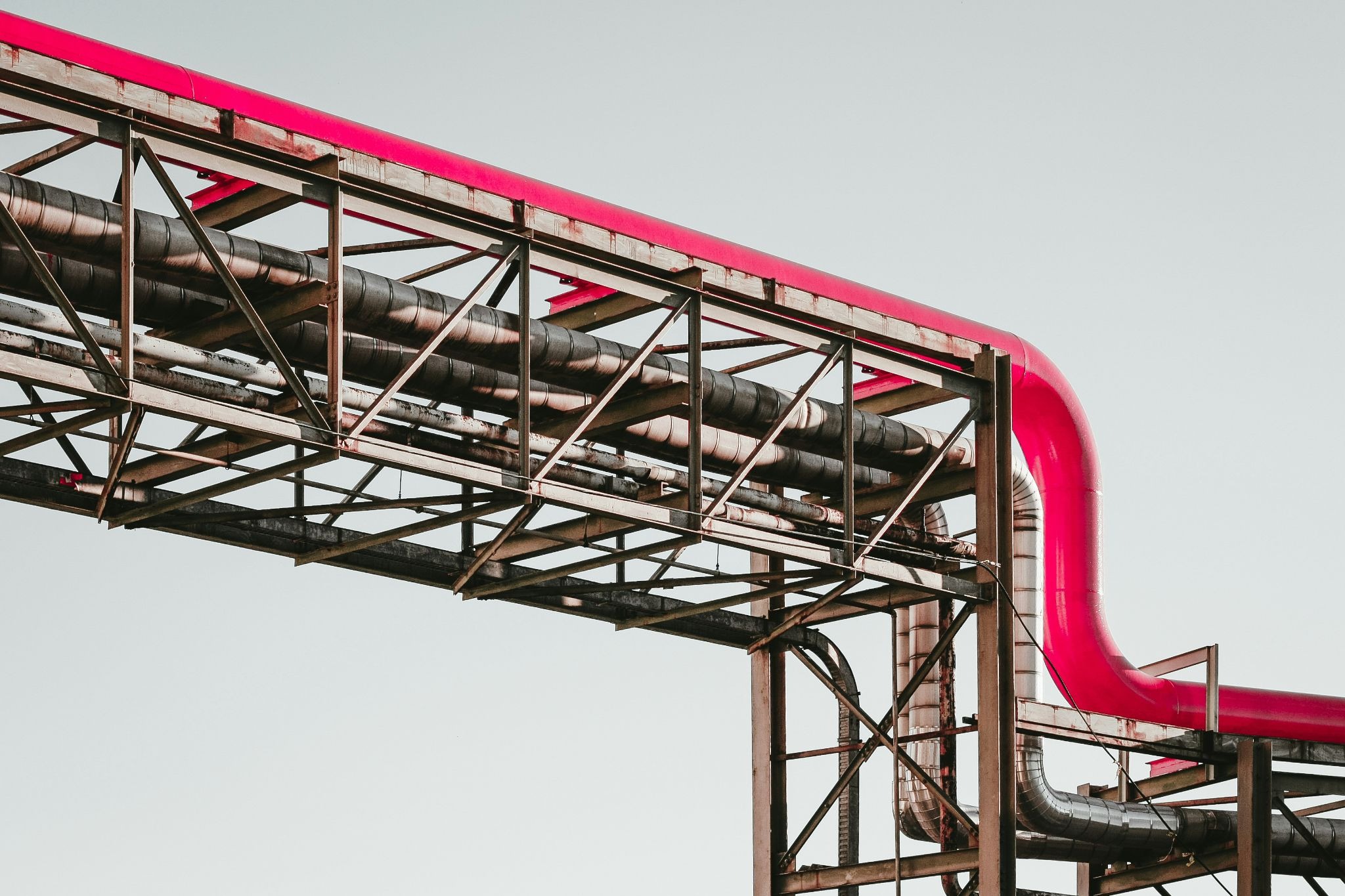
The leading physical threat to a gas pipeline is not the pipe. It is the excavator that does not know the pipe is there. PHMSA's data is blunt on this: excavation damage accounts for more than a third of significant incidents on gas distribution systems, far more than any other cause.
The warning signal here lives outside the pipe itself, in one-call dig tickets, permit feeds, and field reports. The operators who catch it early are the ones whose monitoring overlays that external activity against the network geographically, so a dig ticket near a high-consequence segment becomes a visible alert rather than a buried email.
Seeing a threat that has not touched the pipe yet is the whole point, and it depends on integrating context that a pressure-and-flow view alone will never contain.
Not every warning signal is fast. Corrosion is the slow one, and on older lines it is the most consequential, because external corrosion drives a large share of outright ruptures on aging gas transmission pipe.
And the signal does not appear on a single shift. It appears in the trend across months of inspection data, wall-thickness readings, and cathodic protection levels.
This is where the historian software matters more than the live console. A monitoring approach that only shows the present misses the slow signals entirely, because no single reading is alarming on its own.
Trending the same measurement over time is what turns a series of unremarkable numbers into a clear line heading toward a threshold, and it gives an operator the months of lead time that a real fix requires.
Watching for six signals across six tools is how signals get missed. The point of modern gas pipeline monitoring is not to add more screens for each of these. It is to bring pressure, flow, alarms, sensor health, external activity, and long-term trends into one correlated view, so the operator reads the state of the line rather than assembling it.
That is the function of GridGuardian, Primate's data aggregation and intelligence engine, which consolidates SCADA, GIS, historian, security, and weather feeds into a single normalized stream and surfaces the anomalies worth acting on.
When a pressure swing, a flow imbalance, and a nearby dig ticket all point at the same segment, the value of seeing them together instead of separately is the difference between a dispatched crew and a delayed one.
The same intelligence holds from a single pipeline operator's workstation to the full control room video wall, so the picture stays consistent when an event escalates.
A gas pipeline rarely fails without warning. It fails after a warning that nobody could see in time, which is a different and more solvable problem.
The six signals here are all detectable today. What decides outcomes is whether your monitoring surfaces them as a single, prioritized picture or leaves them scattered for an operator to reassemble under pressure.
If your team is still watching these signals across disconnected systems, that is the gap worth closing before the next anomaly tests it. Request a demo to see how Primate turns scattered pipeline data into one real-time picture.
What is the most common cause of gas pipeline incidents?
Excavation damage. PHMSA data shows third-party digging accounts for more than a third of significant incidents on gas distribution systems, which is why monitoring nearby dig activity matters as much as watching pressure and flow.
How does pressure monitoring detect a pipeline leak?
A leak usually shows as a gradual pressure decline against the expected baseline for that segment and load. Comparing live pressure to historical norms flags the deviation earlier than watching the raw number alone.
What is mass balance in pipeline monitoring?
Mass balance compares metered gas entering a segment against gas leaving it. A persistent imbalance suggests product is escaping, making it one of the most reliable early indicators of a developing leak.
Why are alarm floods dangerous for operators?
A single event can trip dozens of alarms at once, burying the root-cause alert. Without prioritization and duplicate suppression, the most critical signal becomes the hardest one to find.
Can SCADA alone provide full pipeline visibility?
Not by itself. Raw SCADA reports values accurately but does not show data age, geographic context, or long-term trends. Full visibility requires correlating SCADA with GIS, historian, and external activity feeds.


See if your control room is prepared to support AAR and DLR across visibility, data, and operations.
Check Readiness →
.jpg)
.webp)