
Calculate what one control room event really costs | Try our free ROI calculator


Video wall solutions are supposed to be the backbone of situational awareness during grid emergencies. Learn more.
April 20, 2026

Video wall solutions are supposed to be the backbone of situational awareness during grid emergencies. They promise clarity, shared visibility, and faster decision-making when everything is on the line.
But in reality, many video wall solutions fail exactly when they’re needed most.
Not because the screens go dark. Not because the hardware breaks. They fail because the information displayed becomes unusable under pressure.
This article breaks down the real reasons video wall solutions fall apart during grid emergencies, and what actually separates systems that support operators from those that slow them down.
Most video wall solutions are built to display data, not to interpret it.
During normal operations, that’s manageable. Operators have time to scan multiple feeds, cross-check systems, and piece together what’s happening.
During a grid emergency, that luxury disappears.
Operators need:
Instead, many video walls show raw feeds from SCADA, weather, outage systems, and security platforms all at once. It looks comprehensive, but it’s not actionable.
The result is what operators quietly hate: a wall full of data that answers nothing.
The U.S. Department of Energy highlights that real-time situational awareness is critical for grid resilience, especially during disturbances and restoration events. When data is not clearly presented or contextualized, response effectiveness drops significantly.
One of the biggest failures behind video wall solutions is system fragmentation.
In many control rooms, the video wall is just a collection of inputs:
There is no true integration. Just side-by-side visibility.
That forces operators to mentally connect the dots under stress. And during a grid emergency, that’s a dangerous expectation.
What actually works is data aggregation. Systems need to feed into a single operational layer that processes and correlates information before it hits the screen.
When that happens, operators stop interpreting raw data and start acting on clear signals.
This is exactly why modern platforms focus on consolidating multiple operational systems into one unified display that highlights what matters in real time.
A common issue with video wall solutions is that they were never designed for large-scale displays.
Many systems take desktop applications and stretch them across a wall. On paper, that sounds fine. In reality, it creates tiny, unreadable text, distorted graphics, and broken layouts across screen seams.
During a grid emergency, operators are often standing, moving, and collaborating. If they can’t read critical data from a distance, the video wall becomes background noise.
Effective video wall solutions are built differently. Primate, for example, renders content specifically for large-scale environments, ensuring clarity from any viewing distance and across any configuration.
Without that, the wall becomes a liability instead of an asset.
When everything is displayed, nothing stands out.
This is one of the most common complaints from operators during high-pressure events. Video wall solutions often try to show everything at once, assuming more visibility equals better awareness.
It doesn’t.
Cognitive overload becomes the real problem.
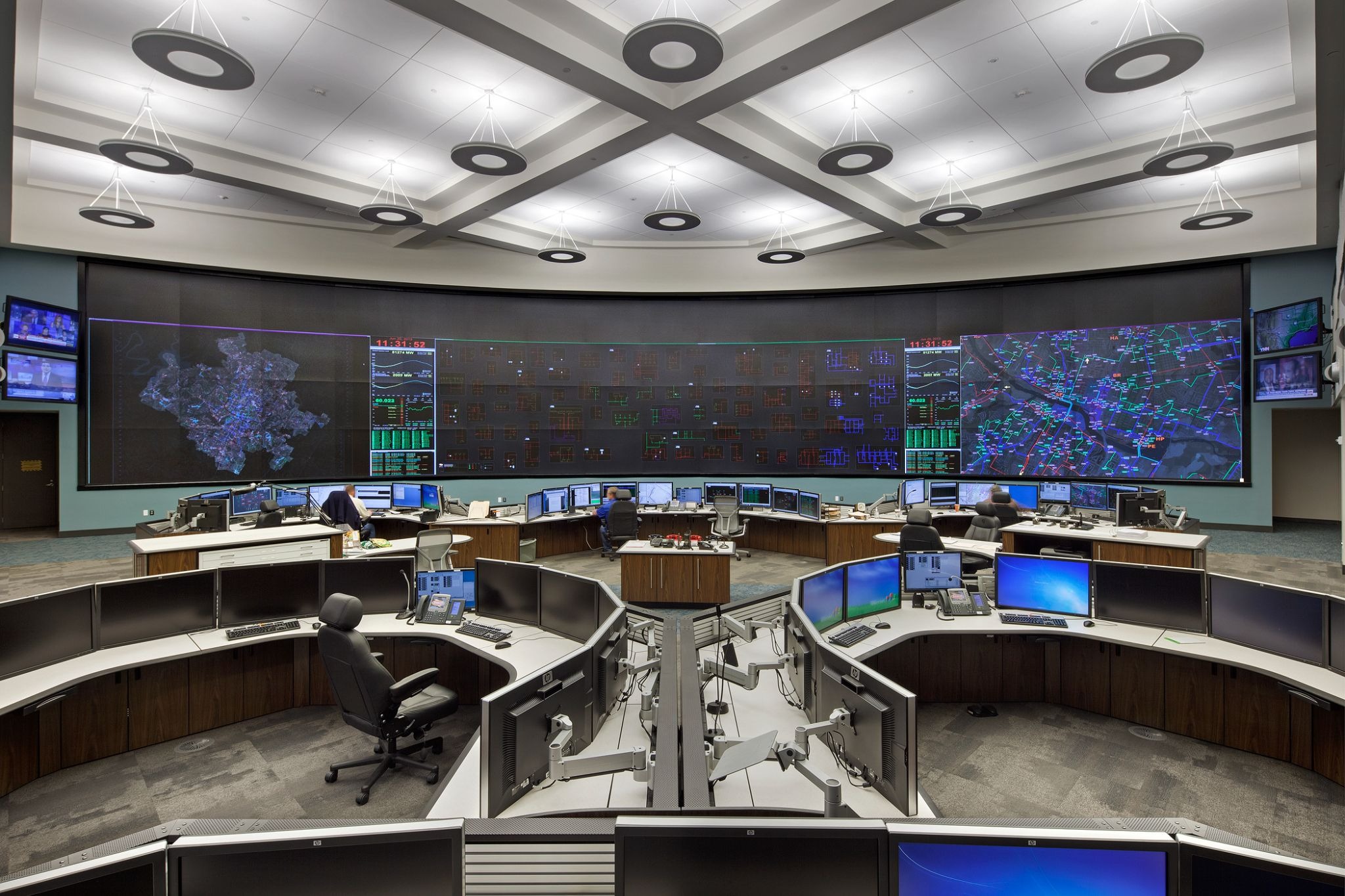
NIST research on human factors in control rooms shows that overloaded displays reduce decision speed and increase the likelihood of errors. Operators simply cannot process excessive information fast enough.
During a grid emergency, the goal is not completeness. It’s prioritization.
The wall should surface:
Everything else can wait.
Grid emergencies are not static events. Conditions change constantly. Yet, many video wall solutions rely on fixed layouts and predefined dashboards.
That creates a mismatch. The display doesn’t adapt to the situation, so operators are forced to dig through different views manually.
This costs time. And during grid restoration or fault isolation, time matters.
Modern systems solve this by allowing dynamic display updates based on real-time conditions. Critical information rises to the surface automatically, without requiring manual intervention.
This shift from static dashboards to adaptive visualization is what keeps operators aligned with what’s actually happening.
Data without context is noise. A voltage drop, a line fault, a weather alert. Each of these means something different depending on the situation.
Many video wall solutions display these signals independently, leaving operators to interpret their relationships.
That slows everything down.
Effective systems layer context directly into the visualization. They connect operational data with external factors and system relationships, so operators understand the situation instantly.
Instead of asking “what does this mean,” they move straight to “what do we do next.”
A video wall is supposed to create a shared operational picture. But in many setups, what’s on the wall doesn’t match what’s on operator workstations.
Different screens. Different views. Different interpretations.
This disconnect creates confusion, especially during coordinated response efforts.
Strong video wall solutions like Primate ensure that the same information is visible across all platforms. Whether someone is at a workstation, on the floor, or remote, they are working from the same reality.
Consistency is what enables coordinated action.
Here’s the uncomfortable truth. Many video wall solutions are designed to look impressive, not to perform under pressure.
They demo well. Clean layouts, smooth animations, lots of data feeds.
But real grid emergencies expose the gaps:
Operators don’t need a showcase. They need a system that holds up when conditions get messy.
That requires design decisions based on real operational workflows, not aesthetics.
The difference between a failing system and a reliable one comes down to a few key principles.
When these elements come together, the video wall becomes what it was meant to be. A decision-making tool, not just a display surface.
Most video wall solutions stop at displaying data. We focus on making that data usable.
We integrate inputs from SCADA, EMS, weather systems, and more into a single, processed view. Then we transform that data into visualizations that remain clear and readable at any scale, whether on a desktop or across a full video wall.
We also design around real operator workflows. That means prioritizing critical information, reducing noise, and ensuring that every display supports faster, more confident decisions during high-pressure events.
The goal is simple. When something goes wrong, your team knows exactly what they’re looking at and what to do next.
Video wall solutions fail because they’re not designed for how operators actually work during emergencies. Grid events are fast, complex, and unforgiving. Systems that rely on manual interpretation, fragmented data, or overloaded displays will always fall short.
If your current video wall solutions struggle during high-pressure situations, it’s not something to ignore.
Book a demo and see how we turn complex grid data into clear, actionable intelligence that your team can trust when it matters most.


See if your control room is prepared to support AAR and DLR across visibility, data, and operations.
Check Readiness →